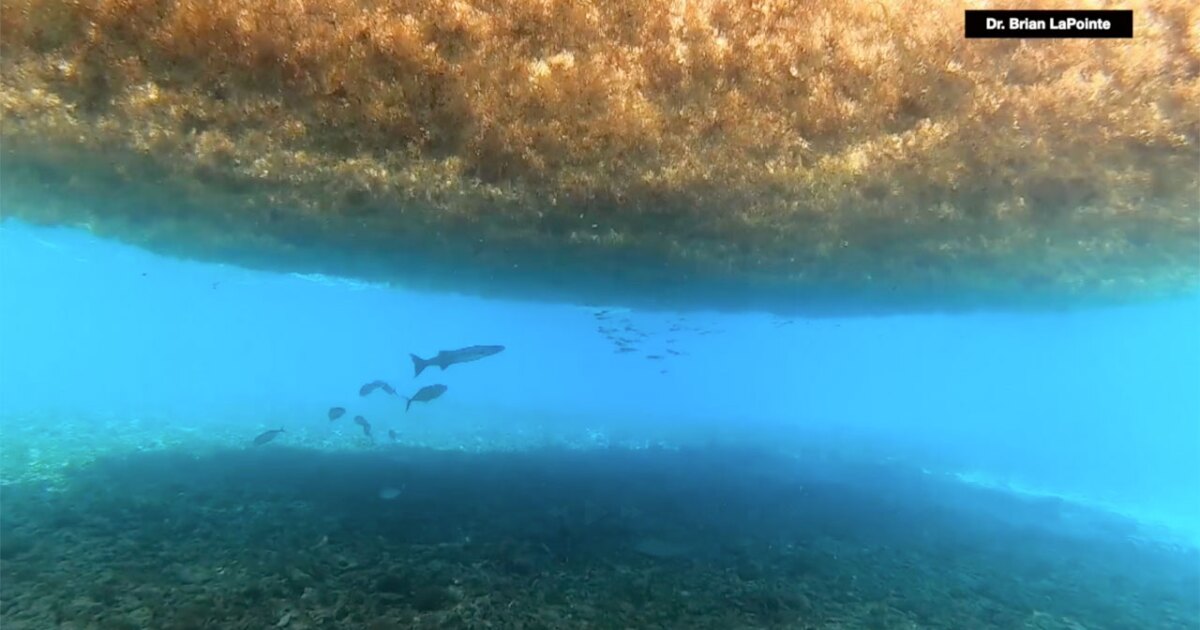
Sargassum seaweed presents a paradox for sea turtles along Florida's coastline. While many beachgoers view the brown seaweed as a nuisance that creates unpleasant odors and clutters shorelines, researchers at Florida Atlantic University explain that the situation is far more complex. The seaweed serves critical functions for sea turtles at different stages of their lives, even as excessive accumulation on beaches creates new hazards for hatchlings.

When sea turtle hatchlings emerge from their nests, they immediately swim toward the ocean. Once offshore, they seek out floating mats of sargassum that become their refuge during one of the most vulnerable periods of their lives. According to Emily Turla, laboratory coordinator at FAU's Marine Science Laboratory and a Ph.D. student, "Sargassum is an important habitat for young sea turtles when it's out offshore in the currents because that's where they swim out to right as they get off the beach." These floating mats provide essential shelter from predators, sources of food, and necessary habitat for young turtles navigating the open ocean.

Dr. Brian LaPointe, a research professor at FAU's Harbor Branch Oceanographic Institute, emphasizes the importance of sargassum in the broader marine ecosystem. "When sargassum is out in the open ocean, it is deemed essential fish habitat and it's also critical habitat for hatchlings leaving the beach," LaPointe said. The seaweed plays an important ecological role that extends beyond sea turtles alone.

The challenges emerge when excessive amounts of sargassum wash onto Florida's beaches. Large piles of seaweed create physical obstacles that hatchlings must navigate to reach the ocean. Turla notes that beachgoers sometimes observe hatchlings struggling within the seaweed accumulation. LaPointe explains that the extra time hatchlings spend maneuvering around these obstacles significantly extends their journey to the water, leaving them more vulnerable to predators during this critical period. As sea turtle nesting season progresses across South Florida, scientists stress that coastal communities must address an ongoing challenge: finding effective ways to manage excessive sargassum while preserving its essential ecological benefits. Understanding the dual nature of sargassum serves as an important reminder that even the most frustrating aspects of the natural environment can play vital roles in supporting local ecosystems and marine life.