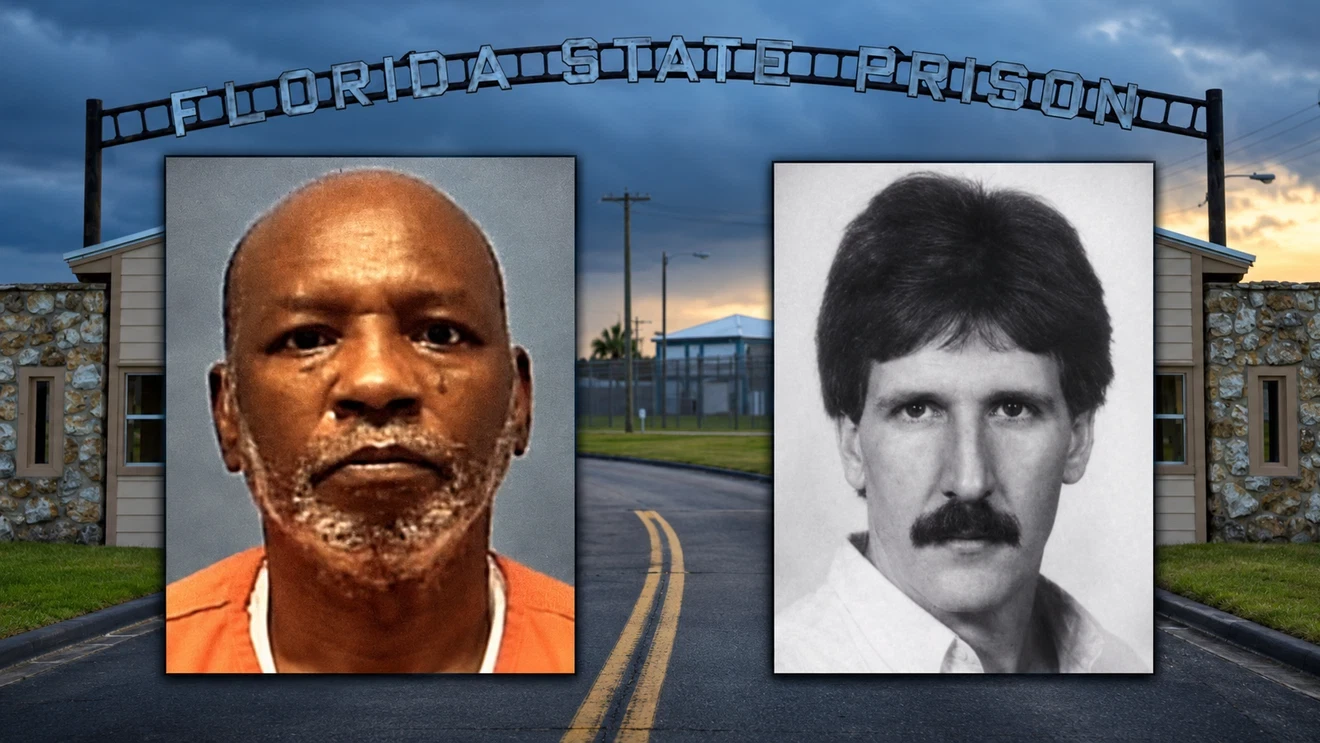
William Reaves, 77, was executed by lethal injection Tuesday evening at Florida State Prison, with an official time of death of 6:12 p.m., 40 years after he killed Indian River County Deputy Richard Raczkoski outside a convenience store near Vero Beach in 1986. The execution had previously been expected after the U.S. Supreme Court denied Reaves' final appeal Tuesday, following the Florida Supreme Court's earlier rejection of his last state appeals; it has now been carried out, with new details emerging about the proceedings.
Indian River County Sheriff Eric Flowers witnessed the execution on behalf of his agency and Raczkoski's family. Flowers said Raczkoski's brother was expected to be among the witnesses and had told him that Christmas was never the same for their family after Richard was killed. Twenty-nine people were in the execution room, including 16 spectators made up of eight men and eight women.
When asked for any final words, Reaves said, "No, I do not." A doctor checked him with a stethoscope and flashlight before he was pronounced dead and the curtain dropped. The Department of Corrections said Reaves had five visitors Tuesday, including his brother, sister, nephew, a friend and his spiritual advisor, and that his final meal was crackers and juice.
According to court records, Raczkoski was called to the convenience store around 3 a.m. on Oct. 23, 1986, to help Reaves get a cab. A gun fell from Reaves' shorts and the two struggled over it. Records say Reaves shot the deputy in the back four times as Raczkoski turned away.
Raczkoski's son was born after his father's death. Reaves was arrested two days later in Albany, Georgia, and admitted to the shooting in a taped interview with Indian River County detectives, telling them he had been using cocaine. According to a transcript filed by the state, he said, "I've never met a finer officer in my life."
Reaves was convicted in 1987, but the Florida Supreme Court threw out that verdict in 1991 because one of the prosecutors had previously represented him. A second jury convicted him in 1992 and voted 10-2 to recommend death. Gov.
DeSantis signed his death warrant in September and denied clemency the same day. Reaves' attorneys fought the execution to the end, arguing in court filings that he was a Vietnam veteran rated 100% disabled for post-traumatic stress disorder by the Department of Veterans Affairs and that the jury that sentenced him never heard details of his combat service. They also argued he had been shut out of the clemency process.