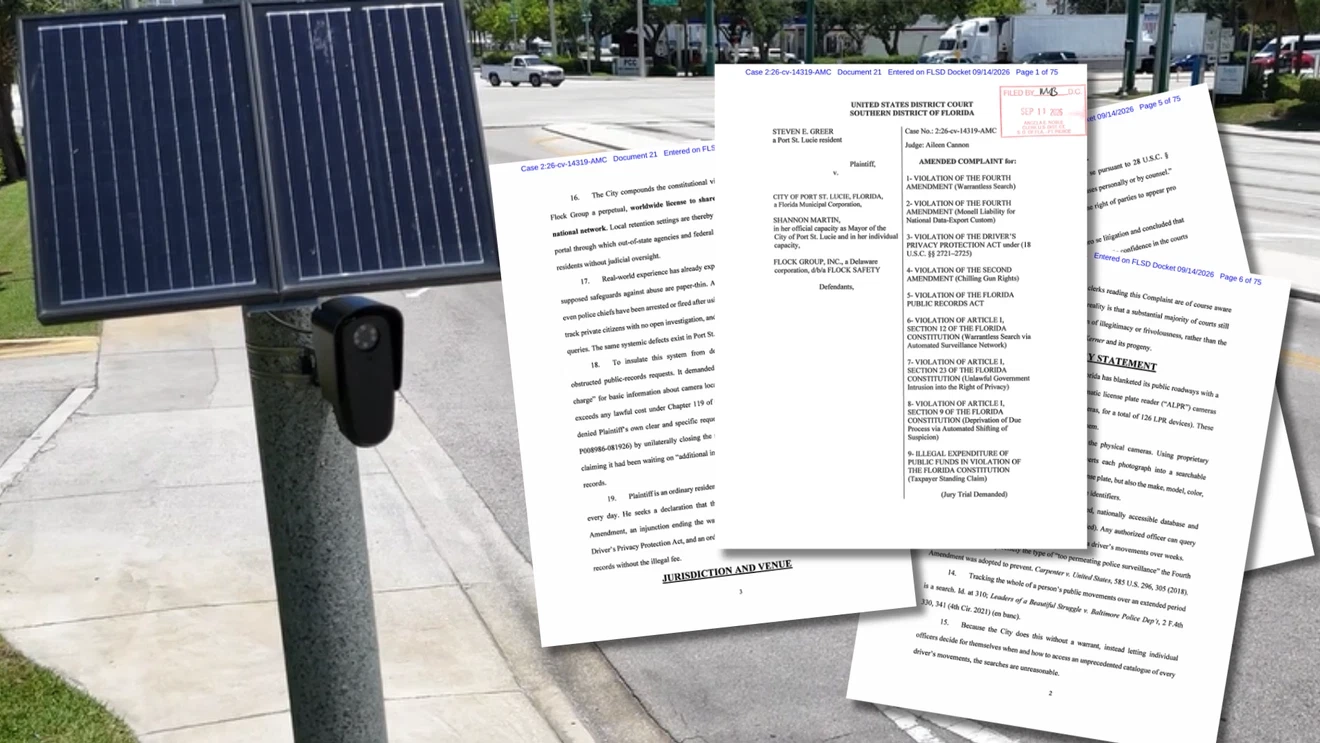
A Port St. Lucie resident is representing himself in a federal lawsuit against the city, Mayor Shannon Martin and surveillance company Flock Safety, challenging a combined network of 126 license plate cameras he says violates residents' constitutional rights. Steven Greer, a former surgeon who later worked on Wall Street, filed the suit in August and has since amended it. His complaint alleges Port St. Lucie operated 53 Flock cameras along with 73 Axon license plate readers.
Greer argues the cameras, which photograph passing vehicles and record identifying information along with time and location, let police reconstruct a person's movements without a warrant. He says this violates the Fourth Amendment's protection against unreasonable searches and seizures. "I was appalled at what I learned," Greer said.
His complaint also cites two cases involving the cameras, including the arrest of Fort Pierce Officer Josepher Crutchfield, who was accused of searching his ex-girlfriend's vehicle 382 times, and a woman who was mistakenly jailed after her vehicle was wrongly linked to a deadly hit-and-run before charges against her were dropped. Greer contends those incidents point to a larger problem with the surveillance system itself.
The lawsuit also raises a Second Amendment argument, pointing to Flock cameras reportedly installed at the entrance to the Ocala Shooting Range in Marion County. Greer argues that recording visitors to a gun range could discourage people from exercising their right to bear arms. "When I saw that case where they have Flock cameras in gun ranges, I said, 'Whoa, that's a Second Amendment violation,'" Greer said.
"The key buzzword is chilling. You know, if they scare you away from using your gun rights that's a violation." His complaint additionally challenges the city's handling of public records requests, alleging officials withheld information about camera locations and system audit logs, and raises claims under Florida's constitutional privacy protections along with questions about the legality of public spending on the network.
Port St. Lucie has already voted to remove 18 of its 53 Flock cameras, but Greer says that is not enough because a future administration could reverse a voluntary decision. "The end result is to get a consent decree, where the city and Flock agrees to pull the cameras forever," he said. His amended lawsuit seeks a court declaration that the city's surveillance program is unconstitutional, an injunction limiting the network's operation or data sharing without a warrant backed by probable cause, access to disputed public records, statutory damages and litigation costs.
Greer said his main goal is a binding court order rather than money. "I'm not running for office. I'm not seeking attention," he said. "It's my way of doing something." A federal judge has not ruled on whether Port St. Lucie's camera program is unconstitutional, and the case still faces potential motions to dismiss.