
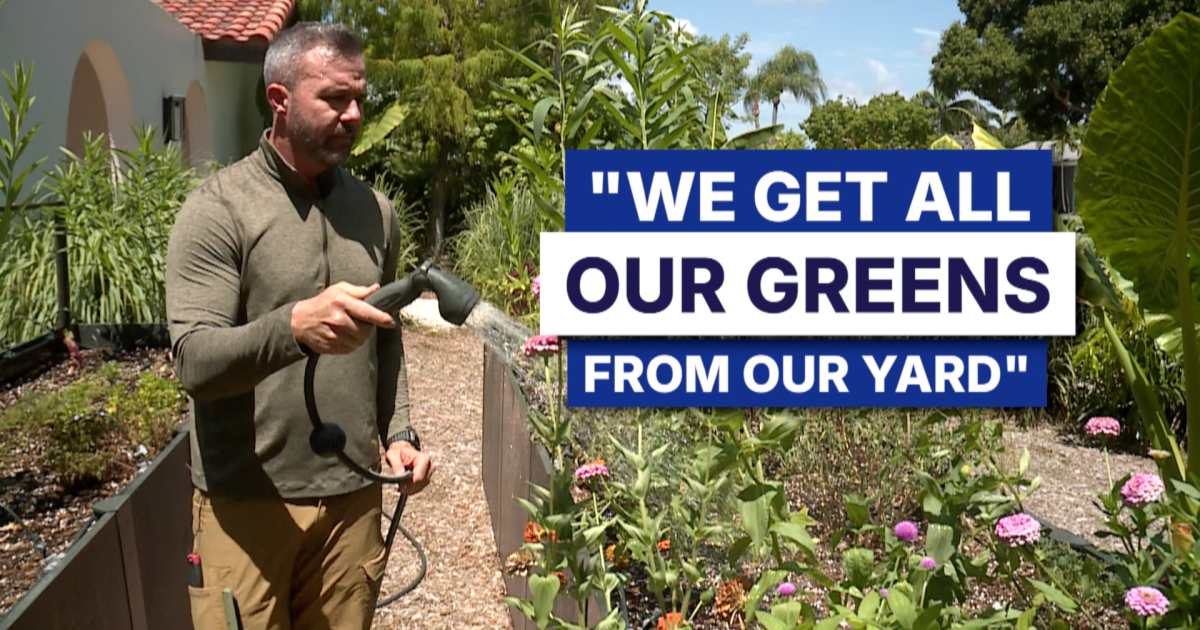
Ryan Boylston of Delray Beach has transformed his front yard into a food production system that supplies all the greens his family eats. Instead of decorative shrubs or a white picket fence, rows of edible plants stretch across the property, including spinach, lettuce, arugula, star fruit, bananas, peppers, pineapple and herbs. The unconventional yard also features what Boylston calls a "malay apple" and a "salad tree." Boylston said nothing is sprayed on the plants except water, and his family eats food from the garden every day.
Boylston started growing his own food about three years ago after struggling to find produce he felt was healthy and free of chemicals or contaminants. The decision has insulated his family from current food safety concerns as growing outbreaks linked to bacteria and parasites on produce continue making headlines. According to the Florida Department of Health, there have been 94 confirmed cases of cyclosporiasis statewide, including two in Palm Beach County, two in St Lucie County and one in Martin County.
"So many people right now are worried about this outbreak, have you even had to worry about it at this point?" WPTV's Joel Lopez asked. "No, because we get all our greens from our yard," Boylston replied.
What began as a personal solution has turned into a business. Through his company, Urban Abundance, Boylston now helps others install gardens in their own yards. The other half of his property is filled with herbs and vegetables growing in raised planters similar to the ones he builds for customers.
For Boylston, gardening has become about more than just food safety. "Eating from them really is the cherry on top," he said. "It's the experience you get, it's my kids getting home from school and they don't run in the house they run into the garden."
For beginners interested in starting their own garden, Boylston recommends growing crops that can handle Florida's intense summer heat, including spinach, sweet potatoes and yardlong beans. He says lettuce and tomatoes do much better during the winter months. Pineapples and mangos are also among the hardier Florida-friendly plants in his garden.
Growing food in South Florida comes with challenges, especially iguanas, which are notorious for destroying gardens. Boylston recommends raised garden beds with smooth sides that iguanas cannot easily climb, or building cages or enclosures around plants growing directly in the ground.