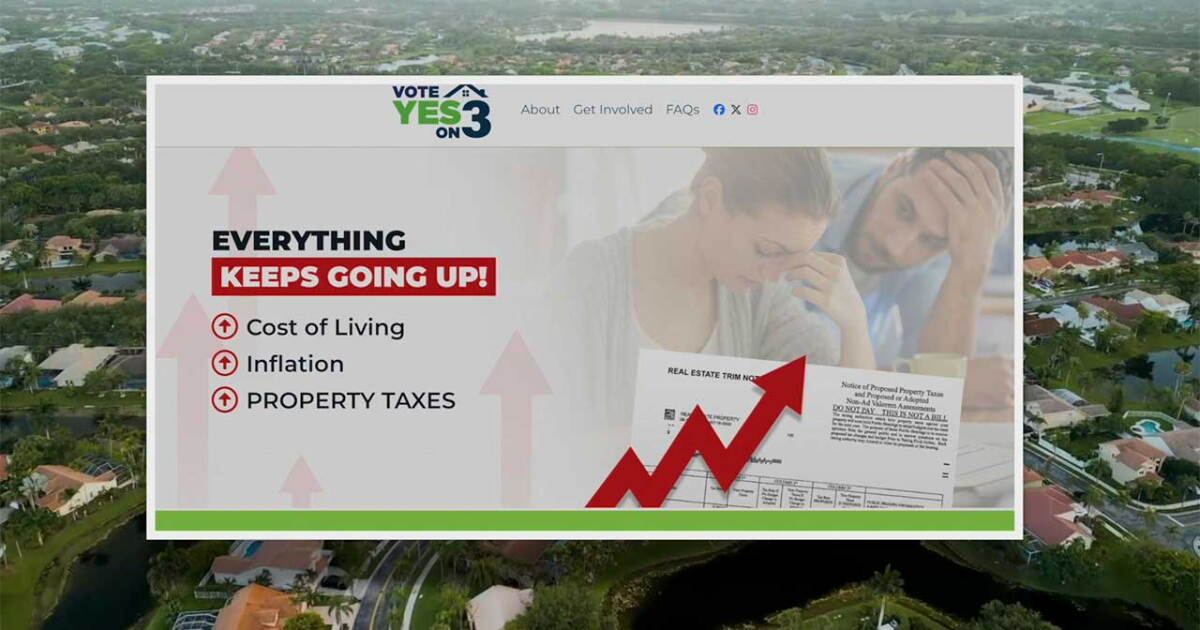
Florida Realtors is investing $10 million to promote Amendment 3, a November ballot measure that would increase the homestead exemption for non-school property taxes to $150,000 in 2027 and $250,000 in 2028, with inflation adjustments afterward. The measure would also lower the annual assessment-growth cap on non-homestead properties, including rentals and commercial buildings, from 10% to 5%.
Margy Grant, CEO of Florida Realtors, said the campaign centers on helping families afford the ongoing costs of homeownership beyond the initial purchase. "Affordability doesn't end at closing. There's lots of costs that go into homeownership.
"For example, insurance, repairs, property taxes," Grant said. She said the changes would help homeowners retain more of their earnings and give rental and commercial property owners more predictability.
The state's Revenue Estimating Conference projects the amendment would eventually reduce annual local, non-school property-tax revenue by about $11.8 billion if approved. The estimated losses begin at roughly $4.93 billion in fiscal year 2027–28 and grow over time. Opponents argue those losses could force cuts to services, higher fees or additional assessments. "You might pay a couple of thousand dollars less for your property taxes, but you're going to wind up paying more as the cost shifts onto fees, additional assessments," said Edie Ousley, a spokesperson for Vote No on Amendment 3.
Cities, counties and public-safety groups opposing the amendment warn the losses could force difficult choices. "Are you going to have to pay a fee to use your local library? What about fire assessment fees, storm water, additional storm water fees?" Ousley said.
Grant said the impact would vary across Florida's 67 counties and expressed confidence that local officials could make decisions to manage it. Gov. Ron DeSantis has said he will help promote the amendment in some capacity, despite wanting a larger property-tax cut.
An Aug. 18 Sachs Media survey of 800 Florida voters found 63% support overall and 37% opposition. That puts support three percentage points above the 60% required for passage, within the survey's overall margin of error of plus or minus 3.5 percentage points. Voters will decide Nov. 3.