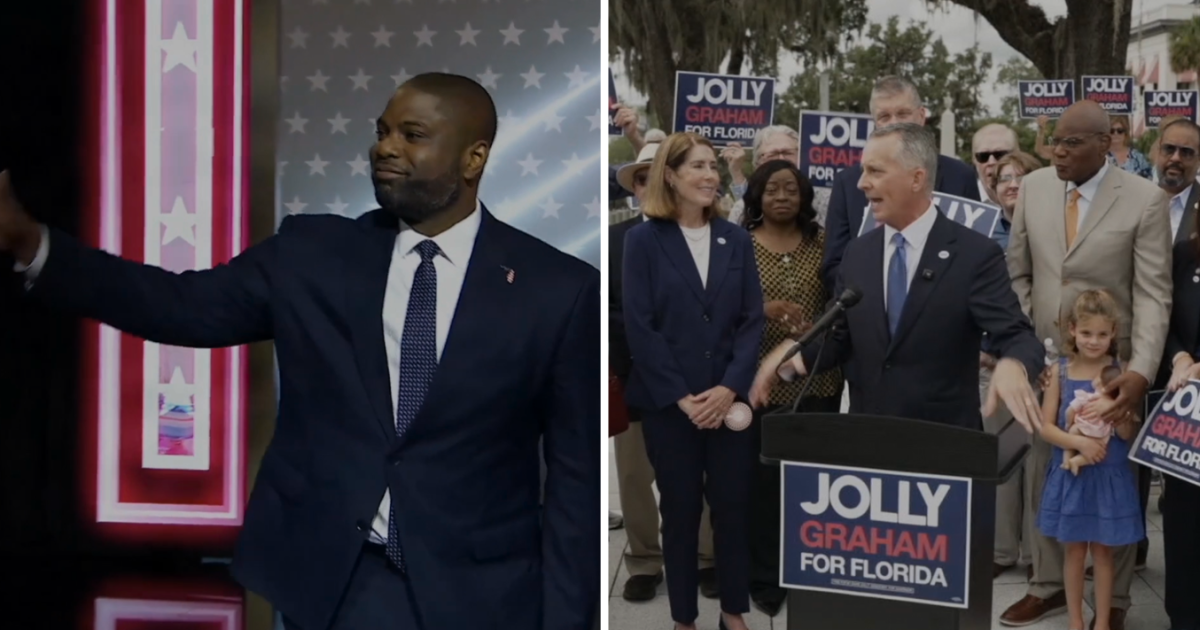
Florida's governor's race has sharpened into competing attacks over ideology and influence as Republican Byron Donalds portrays Democrat David Jolly as an ally of socialism while Jolly counters by alleging donors are buying control of the Republican nominee.
The escalating fight arrives as voters typically begin paying closer attention after Labor Day, according to political analyst Susan MacManus. At the GOP's midterm convention in Dallas on Wednesday, Donalds accused Jolly of embracing "radical socialism" and singled out Jolly's proposal for public hurricane coverage, describing it as a government takeover of property insurance that would leave Floridians paying a new tax.
Donalds argued the costs would reach beyond coastal homeowners to renters and other insurance customers. "This election cycle is about one thing: common sense versus crazy," Donalds said.
Jolly fired back by targeting Donalds' financial backers. "The same people that have owned Tallahassee for 30 years are buying Byron right now, because they want to control Tallahassee, not because they care about Byron," Jolly said in an online video. Jolly framed his campaign as a chance to disrupt that power, arguing that a coalition seeking change could overcome Donalds' financial advantage.
Florida Democratic Party Chair Nikki Fried accused Donalds during a virtual news conference Wednesday of supporting President Donald Trump's policies at Floridians' expense. "Let me be clear: there is nothing about this record that is worth celebrating," Fried said.
The ideological theme continued Thursday at Miami's Bay of Pigs Museum, where Gov. Ron DeSantis promoted classroom lessons about the dangers of communism. Donalds' running mate, former state Sen.
Bryan Avila, joined DeSantis and accused Democrats of promoting socialist policies, invoking his family's experience fleeing communist Cuba. "In fact, I've offered several of them to give them a one-way trip to Cuba, so that they understand the horrors of communism," Avila said. The Republican attacks also extend to state Rep. Angie Nixon, the Democratic nominee for U.S. Senate, who joined the Democratic Socialists of America in June, according to PolitiFact's reporting published by WLRN.
MacManus said campaigns time their strongest messages to when people are preparing to cast ballots. "There's an old saying that you save your best ads and strategies for right at the point when people actually begin casting ballots," MacManus said. But getting voters' attention is only part of the challenge, she said, as distrust of politics and lower participation in midterm elections make turnout difficult. "The game is absolutely turnout," MacManus said.