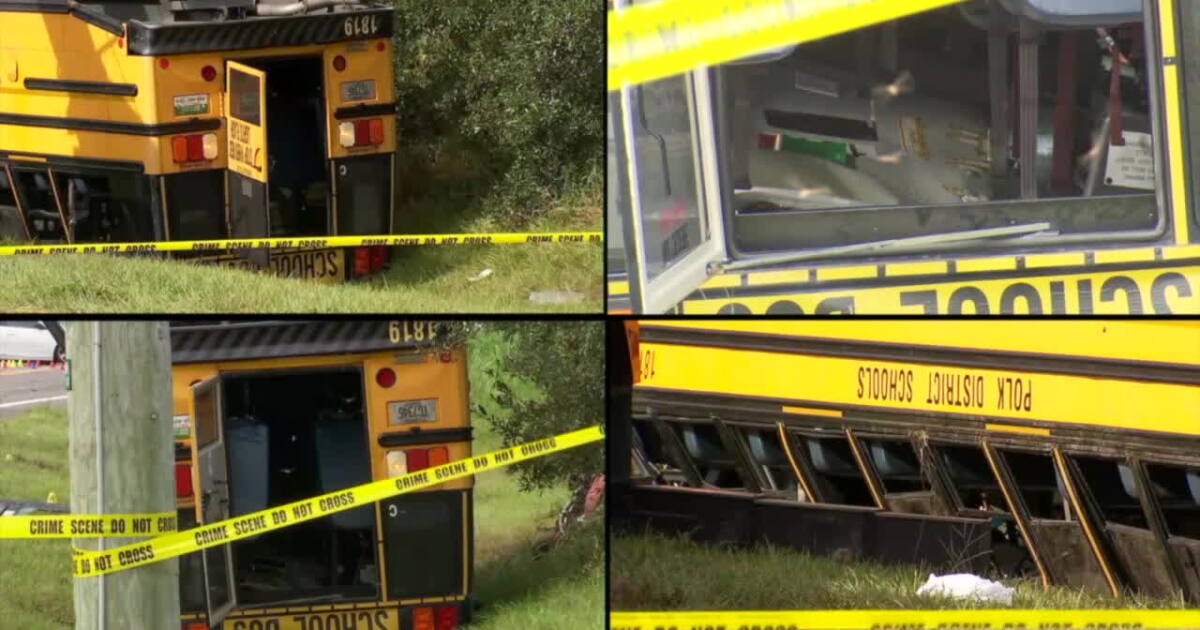
A fatal school bus crash in Polk County is reigniting scrutiny of Florida's weak seatbelt requirements, 14 years after a St. Lucie County bus crash first prompted federal investigators to urge the state to mandate stronger restraints. A 10th grader headed to Winter Haven High School was killed Monday morning when a school bus carrying 39 people crashed. Polk County Sheriff Grady Judd called it heartbreaking at a morning news briefing, saying the district lost "one fatality of a beautiful high school girl." Investigators have not released how many students were wearing seatbelts, what type of restraints were on the bus, or whether the belts affected the outcome of the crash.
Florida law requires school buses built since 2001 to have seatbelts, but it does not require students to wear them and does not require the lap-and-shoulder belts that federal safety investigators consider far more protective. Most Florida school buses, including every bus in the Polk County school district according to a district spokesperson, are equipped only with standard lap belts.
The gap between Florida law and federal recommendations traces back to a 2012 crash in St. Lucie County, where a school bus collided with a semi-truck and killed 9-year-old Aaron Beauchamp. Aaron was wearing the bus's standard lap belt when he died. The National Transportation Safety Board later investigated the crash and tested how different seatbelt designs affect student safety.
Its simulations found that lap-and-shoulder belts control a passenger's movement far better in a crash than lap belts alone, leading the agency to recommend that all school buses nationwide, and specifically all new large school buses in Florida, be equipped with lap-and-shoulder restraints. Florida never adopted that recommendation into law.
Nearly 15 years after Aaron Beauchamp's death, about 20% of St. Lucie County school buses still use only lap belts rather than the safer lap-and-shoulder restraints. Transportation safety experts note that deadly school bus crashes are extremely rare and that buses remain the safest way for students to travel to and from school, but Monday's crash is likely to renew pressure on state lawmakers to revisit Florida's seatbelt standards. Polk County Schools Superintendent Fred Heid said after the crash, "No one will ever understand how heavy this weighs on our hearts."