Indian River County recorded a record 14,083 sea turtle nests as of Oct. 22, while rough surf and king tides threaten remaining nests and have delayed surveys to assess damage. The total surpassed the county’s previous record, set in 2023, by approximately 2,000 nests, according to Coastal Specialist Dakota Whalen. Loggerheads accounted for 10,045 nests, followed by 3,970 green turtle nests and 68 leatherback nests. Whalen said loggerheads drove much of the increase that pushed the county to its highest recorded total.
Whalen credited decades of conservation work for the milestone, including monitoring, partnerships with conservation groups and efforts to encourage turtle-friendly beach practices. Along the county’s 22.4-mile coastline, orange markers identify approximately one in 10 nests. Researchers evaluate those marked nests to help measure reproductive success.
The markers beachgoers see represent only a fraction of the nesting activity. Whalen said marking all 14,000 nests would leave beachgoers little room to sit. The long-term gains reflect years of work protecting both sea turtles and their nesting beaches, he said.
A nor’easter and king tides have brought powerful waves and high water as nesting season winds down. Waves strip sand from the beach, potentially exposing buried eggs, and unsafe conditions have delayed surveys needed to determine the full extent of the damage. Whalen estimated that 75% to 90% of the county’s nests had already hatched before the recent rough weather. Indian River County’s nesting season officially ends on Halloween, though some nests may continue incubating beyond that date.
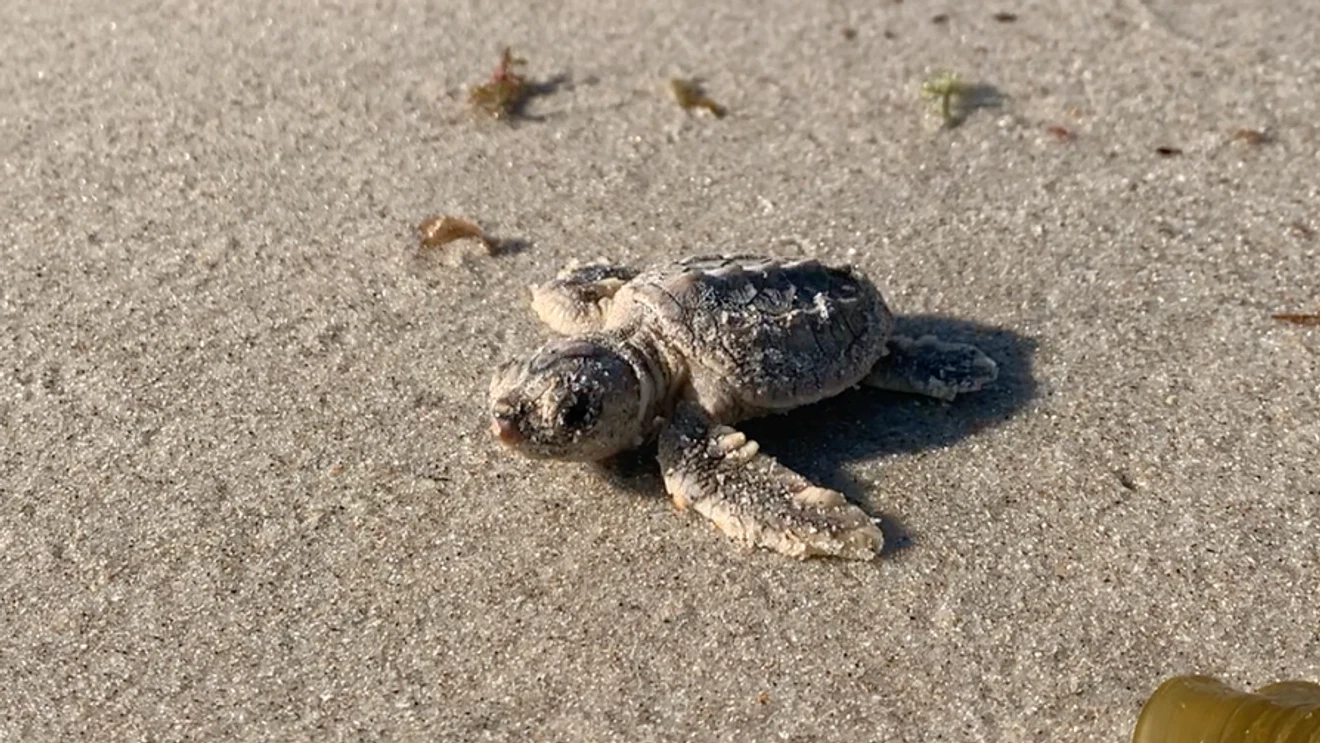
The Florida Fish and Wildlife Conservation Commission advises beachgoers to leave exposed eggs in place rather than collect or rebury them. Eggs swept from their nests rarely survive. Storm currents can also carry young turtles ashore, sometimes tangled in seaweed.
These washback turtles may need specialized care. People should not pick them up or return them to the ocean, but should immediately call FWC’s 24-hour Wildlife Alert Hotline at 888-404-3922 for instructions. Hatchlings actively crawling toward the ocean do not need assistance. Beachgoers can help keep nesting beaches clean, flat and dark by removing beach gear, filling holes, flattening sandcastles and keeping lights off the beach at night.